after throwing – exhibition information
After Throwing
29.8 – 7.10.2026
E.SCAPE – No.3, Lane 40, Wukang Road, Shanghai
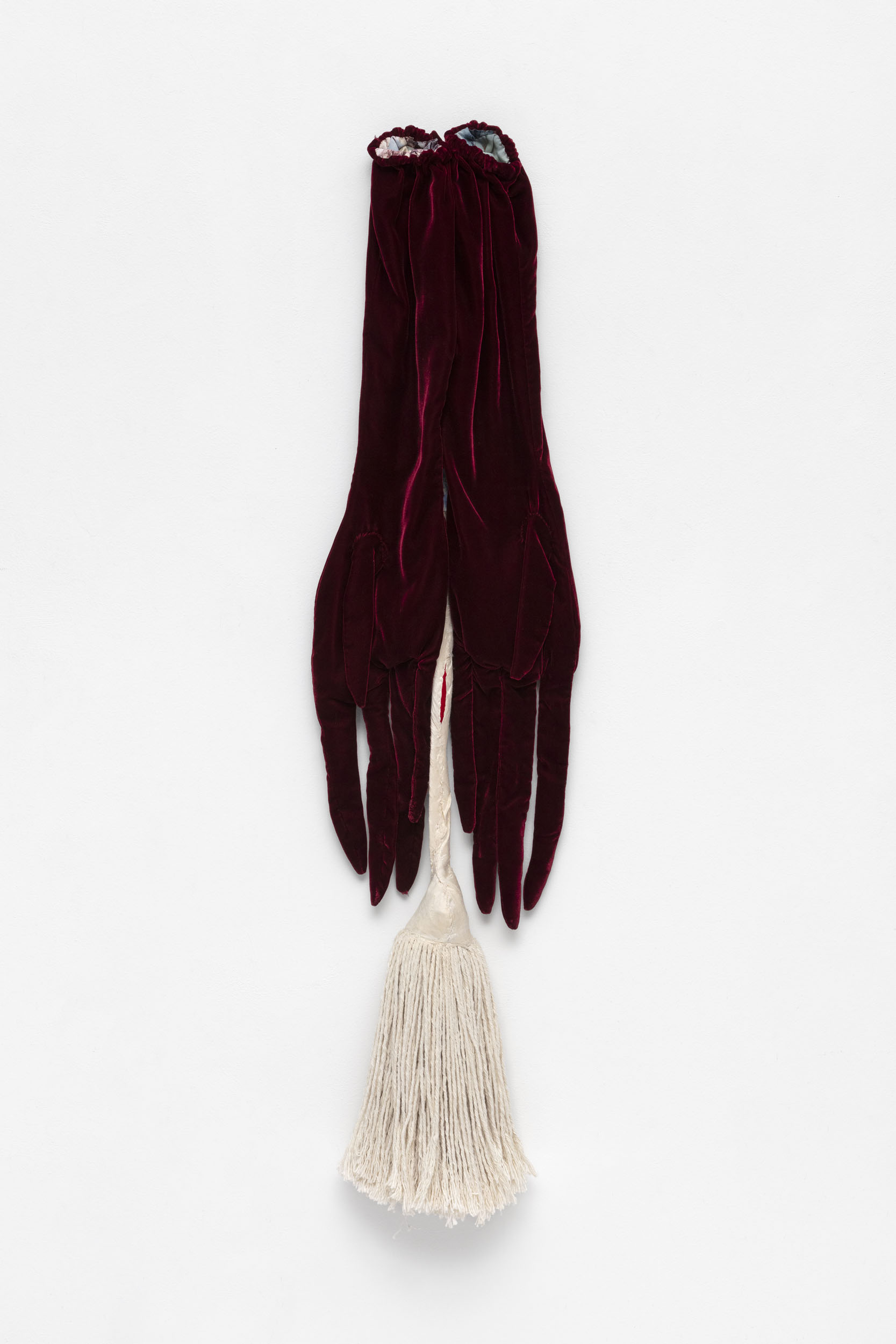
As an artist, an awareness of the body is deeply present in everything I create. As both a woman and a mother, I am drawn to the way the capacity to give birth and care for a child parallels the energy embodied in creating a work of art. The acts of doing, making, and marking with our hands are testimonies to life, love, and survival. Regardless of technology, our physical existence remains a fundamental measure of our human experience.
I have often wondered why women today sometimes seem concerned that caring and nurturing might be seen as diminishing their intellectual capacity. In my experience, both as an artist and as a mother, giving physical energy and presence to something is a way of sustaining life. In our increasingly challenged world, it is evident that what is not cared for falls into neglect. Whether female or male, the capacity to care embodies a profound intelligence essential to life and survival.
The recurring image of hands in my work over more than forty years reflects an enduring fascination with their power to articulate ideas and give form to creativity. Yet hands are equally capable of destruction. When I watch myself painting, I sense that my hands possess their own intelligence, intuition, and perception. To recognize this is to become more aware of what we do and how we do it.
Our dialogue with the body, in a world increasingly shaped by technology, creates new states of perception that alter what it means to inhabit our physical selves. Yet the moment we become ill, or technology fails us, the body’s laws and limitations assert themselves as an undeniable reality.
The unfolding relationship between body and mind, and the conscious care with which we inhabit our bodies, is central to the flowering of who we are. In the age of technology, this relationship takes on new dimensions. Painting, sewing, folding, marking, and making become essential expressions of our humanity, reminding us that the intelligence of the hand and the body remains indispensable as we navigate an increasingly non-human world.
Angela Lyn

Exhibition text from academic advisor Tutu Zhu:
The body is our earliest dwelling, and also the first place where power leaves its traces. Rather than understanding “home” as a fixed space, we might see it as a habit gradually sedimented into the body: the Latin word habitus refers to condition, posture, appearance, and clothing, while its related term habitāre means to dwell or inhabit. When “dwelling” becomes “habit,” home no longer exists only within walls; it enters muscles, gazes, footsteps, and hesitation, becoming a way through which the body comes to understand itself. What is called “like a girl” is precisely what is repeatedly inscribed into the body through such everyday orders.
In Iris Marion Young’s Throwing Like a Girl, a phenomenological analysis reveals how male domination is inscribed into the female body, further reshaping how women act, perceive, and occupy space. In the process of growing up, women learn to contract themselves: movements become cautious, the body becomes hesitant, and one is more likely to see oneself as an object to be viewed rather than as an active medium through which to engage the world. As a result, women often fall into a split condition: both acting subjects and beings constantly burdened by the awareness of being objectified under the gaze. Looking further, this form of discipline does not only operate through movement or posture; it also permeates experiences of pregnancy, menstruation, breasts, clothing, and the domestic sphere. Through gendered divisions of labor, cultural norms, and institutional arrangements, social structures continuously shape women’s bodily experience, emotional expression, and spatial positioning. The theory further extends to the condition of old age, reminding us that care does not naturally equate to respect. Under the name of protection, it may also compromise privacy and autonomy. What it ultimately calls into question is how to dismantle this long-operating, implicit form of power acting upon the body, and how to reclaim bodily subjectivity for women and the elderly alike, along with the dignity, space, and rights that accompany it.
The exhibition After Throwing does not intend to narrate a coming-of-age story in which the act of throwing is completed. Instead, it attends to the aftereffects of the action: the ball has already left the hand, yet the body has not withdrawn its gaze, and the breath has not yet settled. Here, “after” does not point toward progress, nor does it lead to a coherent sense of completion. It allows for pause, repetition, withdrawal, and incompletion. It allows dignity to emerge not from transcendence, but from an honest confrontation with one’s own divided condition. You are invited to enter this interval, one that resists being subsumed into linear time.
Tutu Zhu is a curator, writer and scholar of art philosophy. She holds a PhD from Fudan University, completed through a joint doctoral programme with Yale University, and has curated numerous contemporary art exhibitions, including the nominated artists’ exhibition for the 2021 Jimei × Arles Discovery Award. In 2024, she co-curated the Jinan International Biennale and received the Harper’s Bazaar Art Curator of the Year Award. A bestselling author and translator, she also serves as Art Advisor to the Public Cultural Program at Ruijin Hospital, Shanghai.
身体是我们最早的居所,也是权力最早留下痕迹的地方。与其将“家”理解为一个固定的空间,不如把它看作一种逐渐沉入身体的习惯:拉丁语 habitus 同时指向状态、姿态、外观与衣着,而与之相关的 habitāre 则意味着居住与栖居。当“居住”成为“习惯”,家便不再只在墙壁之内;它进入肌肉、目光、步伐与迟疑之中,成为身体理解自身的方式。所谓“像女孩一样”,也正是在这样的日常秩序中,被反复写入身体。
艾莉斯·M. 杨(Iris Marion Young)的《像女孩一样丢球》(Throwing Like a Girl),从现象学角度揭示了男性宰制进入女性身体,并进一步改变女性行动、感知以及占据空间的方式。女性在成长过程中学会收缩自己,动作变得谨慎,身体变得迟疑,也更容易把自己看成被观看的对象,而不是通向世界的主动媒介。由此,女性常常陷入一种分裂状态:既是行动的主体,又始终背负着作为客体被凝视的意识。进一步看,这种规训并不只作用于运动或姿态,也贯穿于怀孕、月经、乳房、服饰以及家的经验之中。社会结构通过性别分工、文化规范与制度安排,持续塑造女性的身体经验、情感表达与空间位置。理论也由此延伸到老年处境,提醒我们看到,照护并不天然等于尊重,它也可能以保护之名,压缩隐私与自主。它真正要追问的,是如何拆解这种长期作用于身体的隐性权力,重新为女性与老年人争回身体的主体性,以及与之相连的尊严、空间与权利。
本展览“丢球之后” 无意讲述一个完成丢球的成长故事。我们关注的是动作完成后的余波:球已脱手,身体尚未收回目光,呼吸仍未平复。在这里,“之后”不指向进步,也不通向连贯的完美。它允许暂停、重复、撤回与未完成,允许尊严不来自超越,而来自对自身分裂状态的诚实面对。欢迎进入这片不被线性时间收编的间隙。
Download press release here (PDF)
